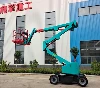

Hydraulic oil is pressurized by a vane pump and flows through an oil filter, an explosion-proof solenoid directional valve, a throttle valve, a pilot-operated check valve, and a counterbalance valve into the lower end of the hydraulic cylinder; this drives the piston upward to lift the load. Oil returning from the upper end of the cylinder flows back to the reservoir via the explosion-proof solenoid directional valve. The rated pressure is adjusted using a relief valve and monitored via a pressure gauge.
When the piston moves downward (i.e., the load descends), hydraulic oil enters the upper end of the cylinder through the explosion-proof solenoid directional valve, while return oil from the lower end flows back to the reservoir through the counterbalance valve, pilot-operated check valve, throttle valve, and explosion-proof solenoid directional valve. To ensure a smooth descent and safe, reliable braking, a counterbalance valve is installed in the return line; this balances the circuit and maintains pressure, ensuring the descent speed remains constant regardless of the load weight, while the throttle valve regulates flow to control the lifting and lowering speeds. To further ensure braking safety and prevent accidents, a pilot-operated check valve (acting as a hydraulic lock) is included to guarantee safe, automatic locking in the event of a hydraulic line rupture.