


The landscape of China's aerial work platform sector keeps reshaping throughout 2026, with market divergence becoming ever more pronounced. The industry has moved past the era of cutthroat pricing alone. For rental firms and overseas buyers alike, equipment reliability, compliance certifications and end‑to‑end delivery capacity have risen to become the primary benchmarks when picking suppliers.
Manufacturers with in‑house production across the full industrial chain keep standing out, steadily expanding their share both in China's domestic aerial rental market and export business.
After years of rapid expansion in the local aerial rental sector, the installed base of equipment has grown substantially, which has shifted how rental companies make purchasing decisions. In earlier days, rental operators focused largely on upfront purchase prices. Today, fleet owners place far greater value on durability, low failure rates and ease of maintenance, prioritising long‑term operational returns.
Many low‑cost assembled units suffer from poor structural integrity and frequent breakdowns, leading to falling utilisation rates. A growing number of rental businesses phase out these knock‑together models when refreshing their fleets and turn instead to original manufacturers with independent production capabilities.
The export market is also opening up structural opportunities. Global demand for aerial access equipment is being driven by infrastructure works, factory fit‑outs and venue maintenance projects. That said, entry barriers keep rising worldwide. Certification requirements such as CE and EAC are subject to increasingly rigorous audits. Many assemblers fail to meet compliance standards and run into trouble during export inspections, making it hard for them to secure consistent overseas orders.
By contrast, full‑line manufacturers holding valid certifications and complete production lines win steady business across Southeast Asia, Russia and other markets thanks to consistent product quality.
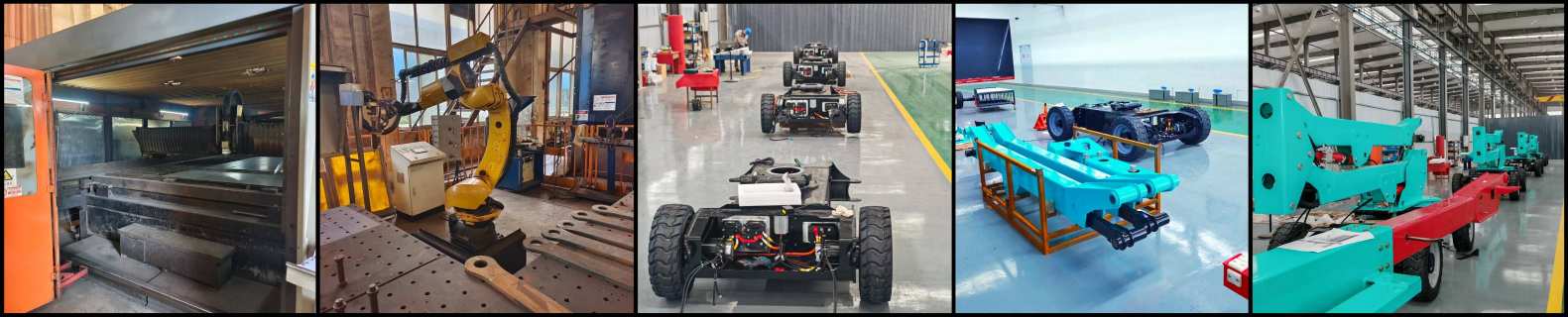
Shandong Longqing Heavy Industry is a full‑chain aerial work platform manufacturer. Our portfolio covers scissor lifts, articulated booms, tracked spider lifts and other aerial access platforms. All key structural components are fabricated in‑house. Robotic automated welding guarantees robust structural strength, and every unit undergoes factory testing in strict alignment with both domestic and international standards.
We hold a complete set of ISO, CE and EAC certifications. This allows us to cater to bulk orders from large domestic construction projects and rental fleets, while also meeting export requirements for multiple countries.
Compared with light‑footprint assemblers, integrated manufacturers carry several decisive strengths. We retain full control over every stage of production: steel cutting, structural component machining, final assembly, performance testing and after‑sales support. This lets us lock in consistent product quality. We are able to fulfil large orders on tight lead times while accommodating custom requests. Since critical spare parts are developed and produced internally, we can guarantee reliable long‑term service and parts supply, cutting ongoing operational costs for rental operators.
Looking ahead, further market consolidation lies ahead for the aerial access sector, squeezing the room for assemblers that rely on low‑price competition. Two major growth drivers - the upgrading of China's domestic rental market and rising global infrastructure spending - will continue to favour original, fully integrated manufacturers such as Shandong Longqing Heavy Industry.
For rental operators and international purchasers, vetting a supplier's genuine in‑house manufacturing capacity and compliance credentials is essential to capture market opportunities and steer clear of procurement risks.